Prosecutors used ChatGPT logs as evidence in the Palisades fire trial
The arson trial of Jonathan Rinderknecht ended in a mistrial after prosecutors introduced his ChatGPT conversational history as evidence of intent, sparking pushback from jurors.
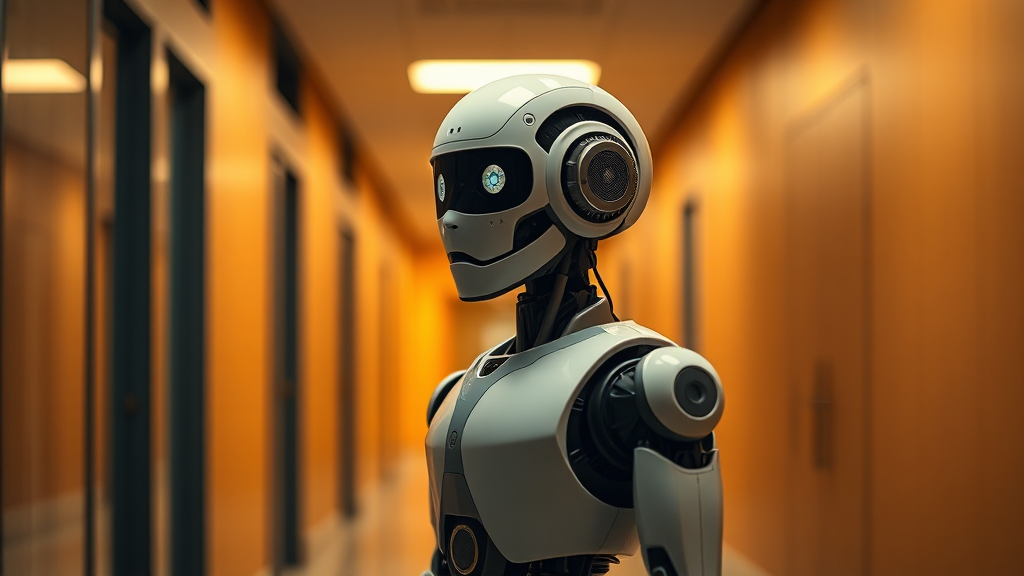
Swiss startup Flexion Robotics, founded by former Nvidia robotics researchers, has developed a simulation-first training method that allows humanoid robots to autonomously perform complex office chores. The system trains robots on individual skills in virtual environments before a master artificial intelligence algorithm coordinates these skills to execute multi-step physical tasks in real-world offices.

Unlike traditional robotics training that relies on human teleoperation to hardcode specific actions like folding laundry, Flexion's approach focuses on generalized adaptability. By combining basic physical maneuvers—such as opening doors, climbing stairs, and carrying packages—the startup's modified Unitree humanoid robot can navigate unfamiliar office layouts to complete complex delivery runs without manual intervention.
Most commercial humanoid demonstrations rely on human operators controlling the machine behind the scenes to perform highly specific tasks. While this approach produces impressive demonstration videos, it frequently fails when the robot encounters minor changes in its physical environment.
According to a detailed report on the technology, Flexion bypasses this limitation by training its robots primarily in simulation. The software allows the robot to master individual physical skills, such as grasping a door handle or balancing on a stairwell, before deploying the physical hardware.
Once these basic skills are established, a master AI algorithm determines the most efficient sequence of actions to complete a broader objective. This allows the robot to adapt to unexpected obstacles, such as a closed door or a misplaced box, without requiring a human to rewrite its code.
To demonstrate the system's capabilities, Flexion released a video showing a modified Unitree humanoid robot responding to a natural language command to fetch a package of snacks. The robot successfully navigated an office building, opened doors, operated an elevator, and delivered the parcel to a desk.
The startup's software translates high-level instructions into a series of physical sub-tasks. If the robot encounters an obstacle while carrying a box, the master algorithm recalculates the path and selects the appropriate physical skill to bypass the obstruction.
This level of physical autonomy represents a shift from static industrial automation to dynamic, unstructured environments. Flexion's founders aim to position these humanoids as general-purpose office assistants capable of handling menial administrative and logistical chores.
The development of physically autonomous robots coincides with a massive corporate push toward digital agentic AI. As enterprises face rising operational costs, executives are increasingly looking to autonomous agents to manage complex workflows.
A report published by MIT Technology Review in partnership with Microsoft notes that research firm Gartner has designated 2026 as an inflection year for organizations aligning AI projects with strategic business objectives. The report highlights that tech teams are rapidly putting agents to work to manage entire workflows rather than just automating isolated tasks.
While digital agents handle software-based workflows, physical humanoids like Flexion's represent the extension of this agentic trend into the physical workspace. The ultimate goal for both software and hardware developers is to build systems that can coordinate multi-step tasks alongside human workers.
Despite the successful demonstrations, significant challenges remain before humanoid interns become a common sight in corporate offices. Training robots in simulation often leads to the "sim-to-real" gap, where physical forces and sensor noise in the real world do not match the virtual training environment.
Flexion has not yet disclosed the hardware costs of its modified units or the computational budget required to run its master coordination algorithm in real time. Additionally, the company has not announced a commercial release date or pricing structure for its software platform.
Subscribe wiring is coming soon. For now, follow the daily news feed or connect on LinkedIn for updates.

The arson trial of Jonathan Rinderknecht ended in a mistrial after prosecutors introduced his ChatGPT conversational history as evidence of intent, sparking pushback from jurors.

Apple's appeal against a London Court of Appeal ruling begins Monday at the UK Supreme Court, challenging a $502 million patent licensing requirement.
Apple hardware executive Paul Meade is reportedly leaving the company to join OpenAI's expanding hardware division amid a leadership reshuffle at Apple.