Improving Your AI Coding Agent Without switching the Model or touching the harness
Microsoft’s SkillOpt shows how AI coding agents can improve through self-evolving skills without retraining the model or rebuilding the agent harness.
Box CEO Aaron Levie publicly diagnosed tech executives with "AI psychosis" on Wednesday, May 27, 2026, arguing that top leaders are too disconnected from the actual labor required to implement artificial intelligence to understand its limitations. Levie's comments on social media highlighted a growing divide between executive-level enthusiasm for automated productivity and the practical realities of software development.

The critique comes during a period of intense financial pressure and rapid restructuring across Silicon Valley. While major tech firms report record revenues, they simultaneously execute mass layoffs, often justifying the cuts with promised efficiency gains from generative AI. Industry observers note that this corporate optimism frequently ignores the technical friction of deploying AI agents in production environments.
According to TechCrunch's report on the phenomenon, Levie argued that CEOs are uniquely vulnerable to these delusions because they do not interact with the day-to-day execution of technical tasks. He noted that executives often build a simple prototype or generate a basic contract using AI, then mistakenly assume autonomous agents can handle the entire workflow.
This top-level perspective misses the complex engineering required to make AI systems reliable. While a CEO might marvel at a single successful output, they rarely deal with the edge cases, system integration, or debugging processes that occupy rank-and-file engineers.
The core of the issue lies in what Levie termed the "last mile of work." Executives are not the ones tasked with reviewing generated code, identifying hallucinated software libraries, or finding bugs before deployment.
"CEOs are uniquely prone to AI psychosis because they’re sufficiently distant from the last mile of work that still has to happen to generate most value with AI," Levie wrote on X.
In practice, integrating AI into enterprise workflows requires extensive manual oversight. Workers must train models on highly specific, idiosyncratic company data, audit outputs for legal compliance, and manually correct errors. This labor-intensive process directly contradicts the executive narrative of immediate, frictionless automation.
The skepticism surrounding executive AI claims is also drawing attention from outside the technology sector. On Monday, Pope Leo XIV issued an encyclical letter titled Magnifica Humanitas, addressing the ethical and societal implications of artificial intelligence.
As reported earlier on coverage of the encyclical, the document warns that the deployment of AI is never a purely technical matter. The Pope emphasized that when AI enters processes affecting human lives, it directly impacts fundamental rights, opportunities, and personal freedom.
Notably, the papal letter avoided any mention of artificial general intelligence (AGI) or superintelligent machines. This omission was seen by some industry insiders as a deliberate rejection of the existential risk narratives popularized by prominent tech executives.
The Pope's encyclical, presented alongside Anthropic co-founder Christopher Olah, drew varied reactions from the tech community. Some critics argued the document should have addressed the imminent arrival of AGI, while others praised its focus on immediate, tangible harms.
The reporting highlighted comments from industry figures who viewed the Pope's grounded approach as a direct critique of Silicon Valley's leadership. By focusing on current societal impacts rather than speculative future superintelligence, the encyclical aligned with critics who argue that executive focus on AGI serves as a distraction from current model limitations.
This debate underscores a widening gap between speculative corporate roadmaps and the practical utility of current models. While CEOs continue to promise fully autonomous agentic workflows, both technical realities and external ethical frameworks are forcing a reevaluation of what these systems can actually deliver today.
Subscribe wiring is coming soon. For now, follow the daily news feed or connect on LinkedIn for updates.
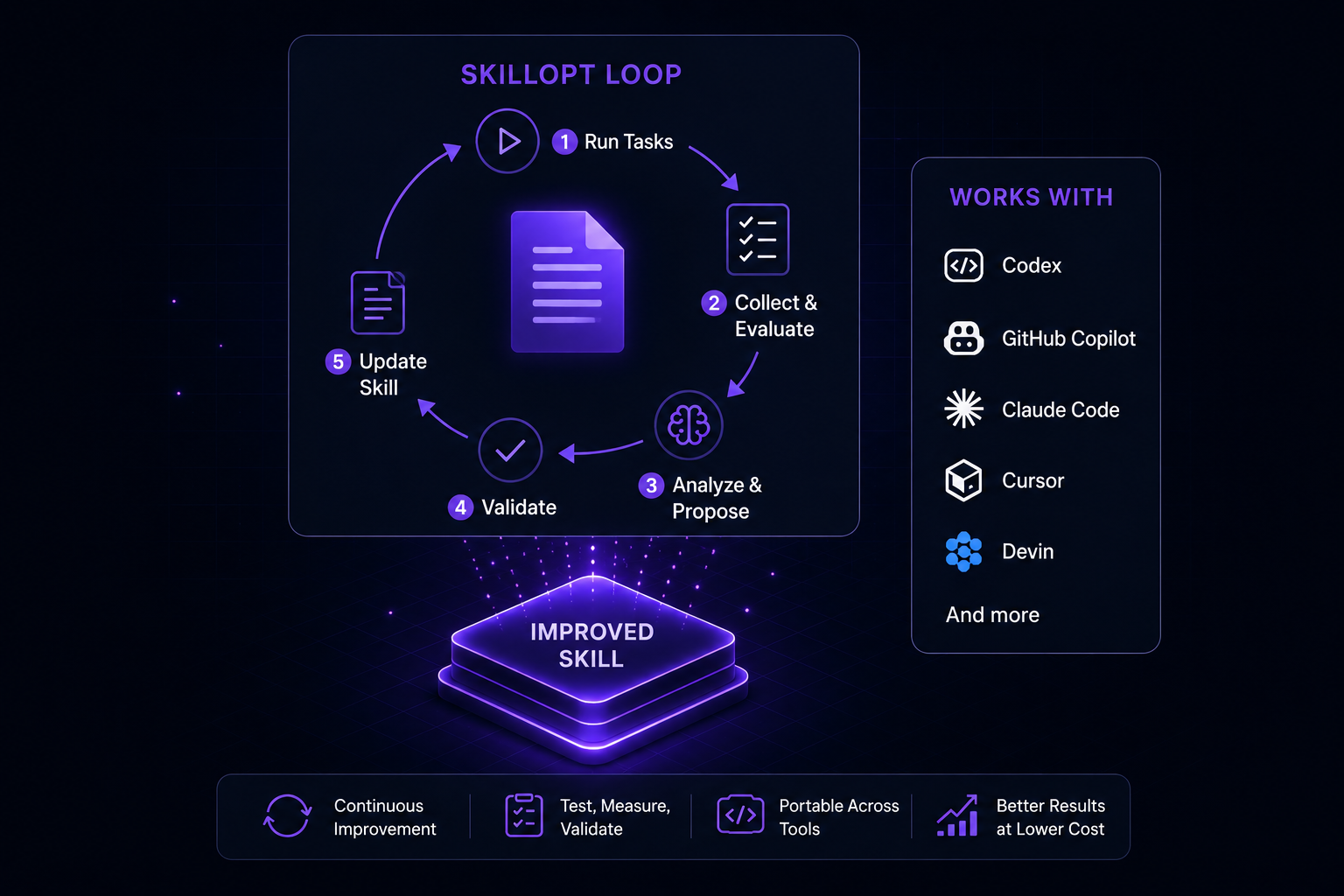
Microsoft’s SkillOpt shows how AI coding agents can improve through self-evolving skills without retraining the model or rebuilding the agent harness.

Ashton Kutcher is departing Sound Ventures, the firm he co-founded 11 years ago, to launch a new early-stage venture capital fund with former NFX partner Morgan Beller.

Anthropic has released Claude Sonnet 5 with a 1 million token context window while securing US Department of Commerce clearance to bring back its sidelined Fable 5 and Mythos 5 models.