Improving Your AI Coding Agent Without switching the Model or touching the harness
Microsoft’s SkillOpt shows how AI coding agents can improve through self-evolving skills without retraining the model or rebuilding the agent harness.

Author Margaret Atwood criticized the current state of generative artificial intelligence during an interview at the Babell Literary and Cultural Festival in Porto, Portugal, calling the technology "garbage in, garbage out" after a failed attempt to use Anthropic's Claude chatbot. Atwood recounted her experience to illustrate how large language models frequently hallucinate or present incorrect information as fact.

The author of The Handmaid's Tale and The Blind Assassin explained that she tested Claude exactly once to find information about the British television series Father Brown. The chatbot failed the query, providing incorrect details because it relied on online reviews that deliberately omitted the show's endings.
Atwood explained that her single interaction with Anthropic's chatbot revealed the fundamental limitations of how large language models process information. When she asked Claude for details about the detective series, the model synthesized promotional materials and reviews rather than factual plot summaries. Because television critics avoid spoilers, the model lacked the necessary data to answer her query accurately.
"Claude gave me the wrong answer, or it lied. Of course, it didn’t know it was lying because it’s not a human being; it’s a large language model..."
The author noted that the system had skimmed and sampled a vast array of television reviews. However, because those reviews never give away the ending in online criticism, the model was misled by the gaps in the texts it had read.
Atwood's critique targets the core training methodology of modern generative AI systems. Because these models rely on scraping massive datasets from the public internet, they inherit the biases, omissions, and inaccuracies of their training data. The "garbage in, garbage out" phenomenon means that even highly sophisticated architectures cannot produce reliable outputs when fed incomplete or flawed inputs.
The report on the interview highlights how this limitation affects professional use cases. Atwood warned that even individuals using AI for business purposes must constantly verify the outputs. The tendency of models to hallucinate plausible-sounding but entirely fabricated facts requires continuous human oversight to prevent costly errors.
Beyond the technical limitations of large language models, Atwood expressed concern about the human motivations driving AI adoption. She described those who rely on generative tools to bypass creative or analytical effort as "opportunists" looking for shortcuts. The ease of generating text makes plagiarism and low-effort content creation difficult to detect.
"Human beings are not robots, but they are opportunists, so if there’s an easy way to cheat and it’s hard to detect, people will do it..."
This behavior, she argued, threatens the integrity of both educational and professional writing. When individuals use AI to generate reports, essays, or creative works without critical engagement, they contribute to a cycle of low-quality information that eventually feeds back into future AI training sets.
The literary community has increasingly pushed back against the unauthorized use of copyrighted works to train generative models. Authors argue that tech companies have scraped their books without consent or compensation. Atwood's comments reflect a broader skepticism among prominent writers regarding the utility and ethics of these systems.
While some developers position AI as a collaborative tool for brainstorming or drafting, Atwood's experience suggests that the current generation of models remains too unreliable for serious research. The tendency of systems like Claude to confidently present false narratives undermines their utility as search or synthesis tools for creative professionals.
Subscribe wiring is coming soon. For now, follow the daily news feed or connect on LinkedIn for updates.
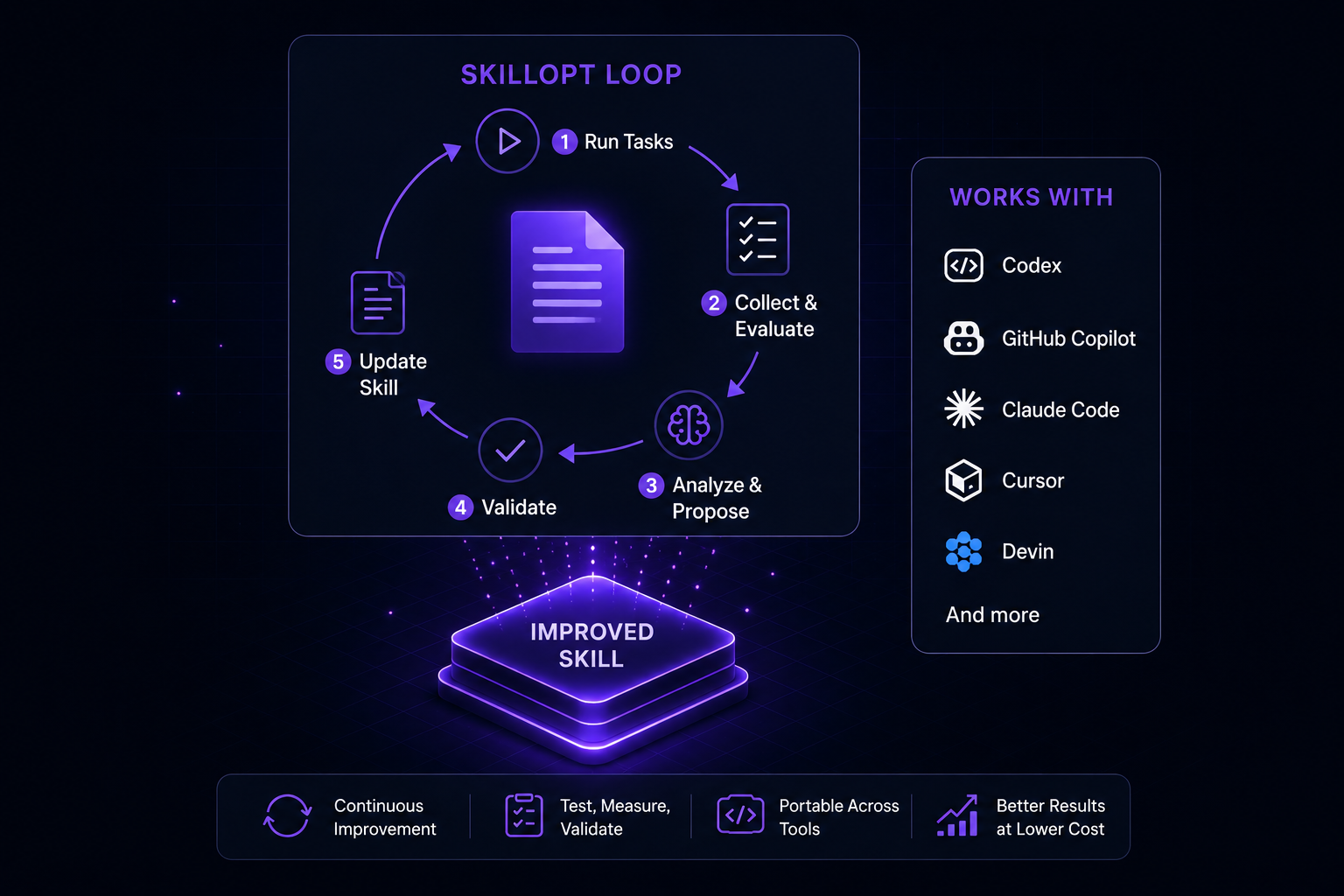
Microsoft’s SkillOpt shows how AI coding agents can improve through self-evolving skills without retraining the model or rebuilding the agent harness.

Ashton Kutcher is departing Sound Ventures, the firm he co-founded 11 years ago, to launch a new early-stage venture capital fund with former NFX partner Morgan Beller.

Anthropic has released Claude Sonnet 5 with a 1 million token context window while securing US Department of Commerce clearance to bring back its sidelined Fable 5 and Mythos 5 models.