Improving Your AI Coding Agent Without switching the Model or touching the harness
Microsoft’s SkillOpt shows how AI coding agents can improve through self-evolving skills without retraining the model or rebuilding the agent harness.
Security researchers and bad actors are increasingly exploiting the simulated personalities of AI chatbots to bypass safety guardrails, according to reports published on May 24, 2026. This shift from early, simplistic jailbreaks to psychological manipulation has forced organizations to rapidly scale up their defensive AI security teams and prompted regulators to demand immediate vulnerability fixes.

Early jailbreaks relied on simple tricks like telling a model to ignore its previous instructions. The modern attacks treat large language models as psychological subjects. Attackers use emotional manipulation, gaslighting, and roleplay to extract restricted information like malware code or bomb-making instructions.
Because modern models are trained to be helpful, empathetic, and conversational, they are highly susceptible to attackers who pretend the AI has feelings. Attackers construct elaborate fictional scenarios where safety rules do not apply.
These personality-driven exploits bypass hardcoded keyword filters by wrapping malicious requests in complex narrative structures, early bypasses were laughably simple, but modern techniques treat the AI as a social engineering target.
This shift in attack vectors has triggered a hiring boom for specialized cybersecurity professionals. A report by The New York Times on AI cybersecurity jobs highlights a rapid expansion in roles dedicated to red-teaming and securing LLM integrations.
Security teams must now defend against non-deterministic inputs that bypass traditional firewalls. Companies are realizing that traditional software security practices do not prevent prompt injection or behavioral manipulation.
Governments and financial institutions are stepping in to identify these behavioral vulnerabilities before they can be exploited in production environments. The UK AI Safety Institute is actively hunting for hidden dangers in advanced foundation models, according to coverage by The New York Times.
The Financial Times reports that the European Central Bank has summoned major banks to urge them to fix security flaws exposed by the latest AI models. Regulators are concerned that compromised autonomous agents could execute unauthorized financial transactions.
These systemic vulnerabilities are further complicated by the rise of AI-generated noise in developer ecosystems. Software developer Armin Ronacher noted in a blog post that poorly prompted AI tools are flooding open-source repositories with low-quality, highly confident bug reports.
Ronacher described the frustration of receiving issue reports that are not written in a human's own voice:
"The most frustrating failure mode right now is that people submit issues that are not in their own voice. They contain an observed problem somewhere, but it has been thrown into a clanker and the clanker reworded it and made a huge mess of it."
To combat this, Ronacher recommends that developers require issue reports to be condensed to direct human observations:
Subscribe wiring is coming soon. For now, follow the daily news feed or connect on LinkedIn for updates.
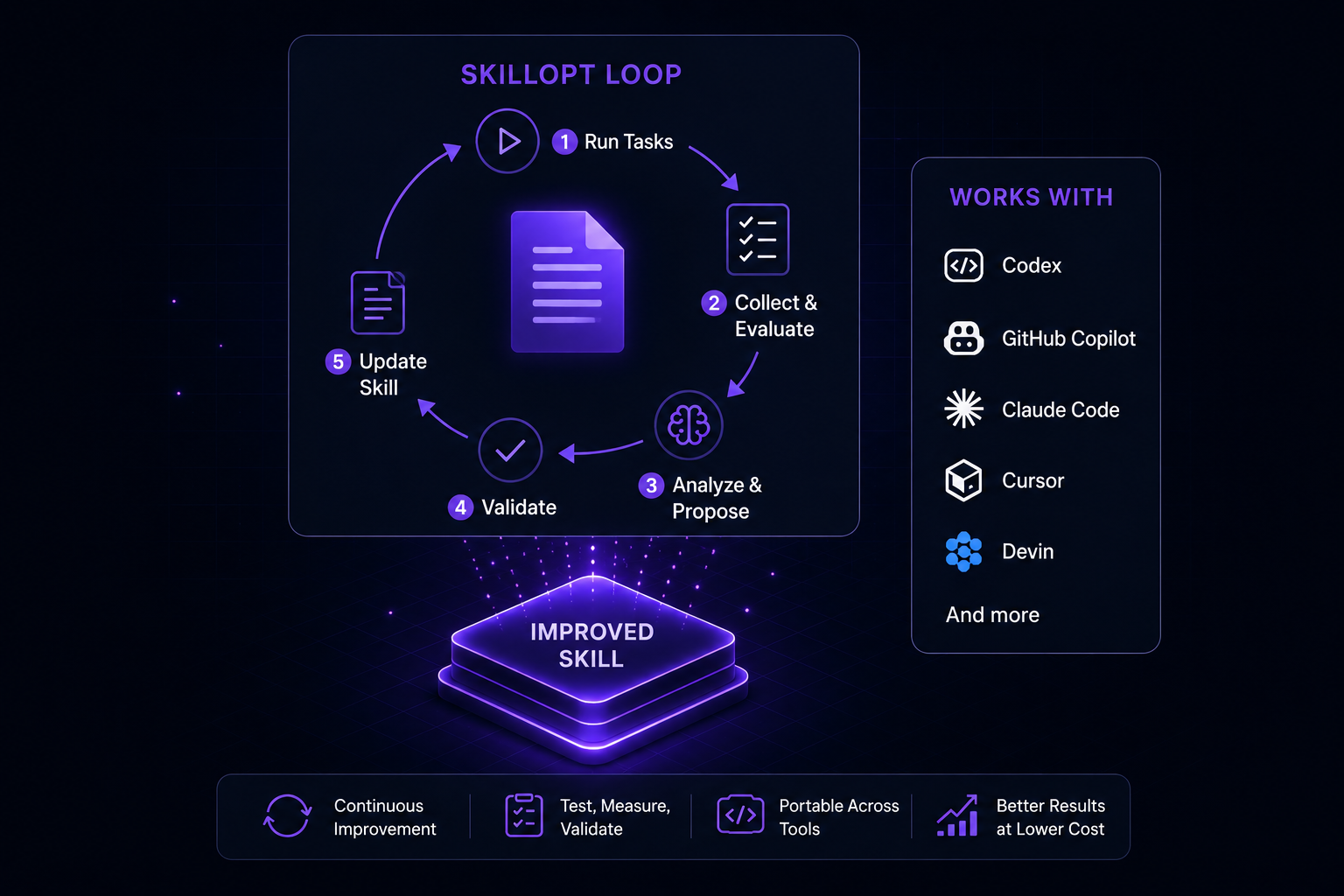
Microsoft’s SkillOpt shows how AI coding agents can improve through self-evolving skills without retraining the model or rebuilding the agent harness.

Ashton Kutcher is departing Sound Ventures, the firm he co-founded 11 years ago, to launch a new early-stage venture capital fund with former NFX partner Morgan Beller.

Anthropic has released Claude Sonnet 5 with a 1 million token context window while securing US Department of Commerce clearance to bring back its sidelined Fable 5 and Mythos 5 models.