Improving Your AI Coding Agent Without switching the Model or touching the harness
Microsoft’s SkillOpt shows how AI coding agents can improve through self-evolving skills without retraining the model or rebuilding the agent harness.

DuckDuckGo launched new browser extensions for Google Chrome and Mozilla Firefox on Monday, allowing users to easily set its dedicated "no-AI" search engine as their default option. The release comes amid a significant traffic surge for the privacy-focused search provider, which has positioned itself as a prominent alternative for users seeking to avoid AI-generated search results.

The new extensions direct search queries directly to noai.duckduckgo.com, a stripped-down version of the search engine that completely omits AI-assisted answers, chat prompts, and AI-generated imagery. DuckDuckGo reported that weekly traffic to its AI-free search page jumped nearly 30 percent, reflecting growing consumer pushback against the aggressive integration of generative AI across mainstream web platforms.
The newly released browser extensions simplify the process of opting out of AI features. Previously, users had to manually navigate to the specific subdomain or adjust advanced settings. The extensions automate this configuration, ensuring that all address bar queries route directly to the clean, traditional, link-based search interface.
According to the, users who already utilize the standalone DuckDuckGo web browser will have their AI-free preferences preserved natively. This setting remains intact even if users clear their browser history, offering a more permanent solution for those looking to avoid algorithmic summaries.
The decision to streamline access to the AI-free search engine follows a notable spike in user acquisition. DuckDuckGo disclosed that web visits to its no-AI search page grew by nearly 30 percent week-over-week. Additionally, its mobile application installs in the United States experienced an 18.1 percent weekly increase.
This migration highlights a growing friction between web users and major search providers. Google's recent integration of AI Overviews into its primary search results has drawn widespread criticism for inaccuracies and clutter. DuckDuckGo is actively capitalizing on this sentiment, presenting its platform as a refuge for traditional, clean web indexing.
The backlash comes as major technology companies double down on generative features. A preview of the Microsoft Build conference highlights how Microsoft is restructuring its entire ecosystem around AI. The company is introducing a Copilot "super app" and deeply embedding reasoning models into the core Windows operating system.
Similarly, hardware manufacturers are optimizing consumer devices to run AI locally. Nvidia's announcement at Computex detailed its new "RTX Spark" PC class. These machines are designed specifically to run personal AI agents constantly in the background. This relentless integration across hardware and software has left privacy-conscious users searching for reliable opt-out mechanisms.
While DuckDuckGo offers a temporary escape from AI-generated search results, avoiding the technology entirely is becoming increasingly difficult. The underlying content of the web itself is shifting. Generative models are rapidly advancing, achieving milestones that blur the line between human and machine output across scientific and creative fields.
For instance, Ars Technica's analysis of OpenAI's math model notes that an internal AI system recently disproved the long-standing Erdős unit distance conjecture. As AI systems autonomously generate complex academic breakthroughs and web content, filtering AI at the search engine level may only address the surface of a deeply transformed digital ecosystem.
Subscribe wiring is coming soon. For now, follow the daily news feed or connect on LinkedIn for updates.
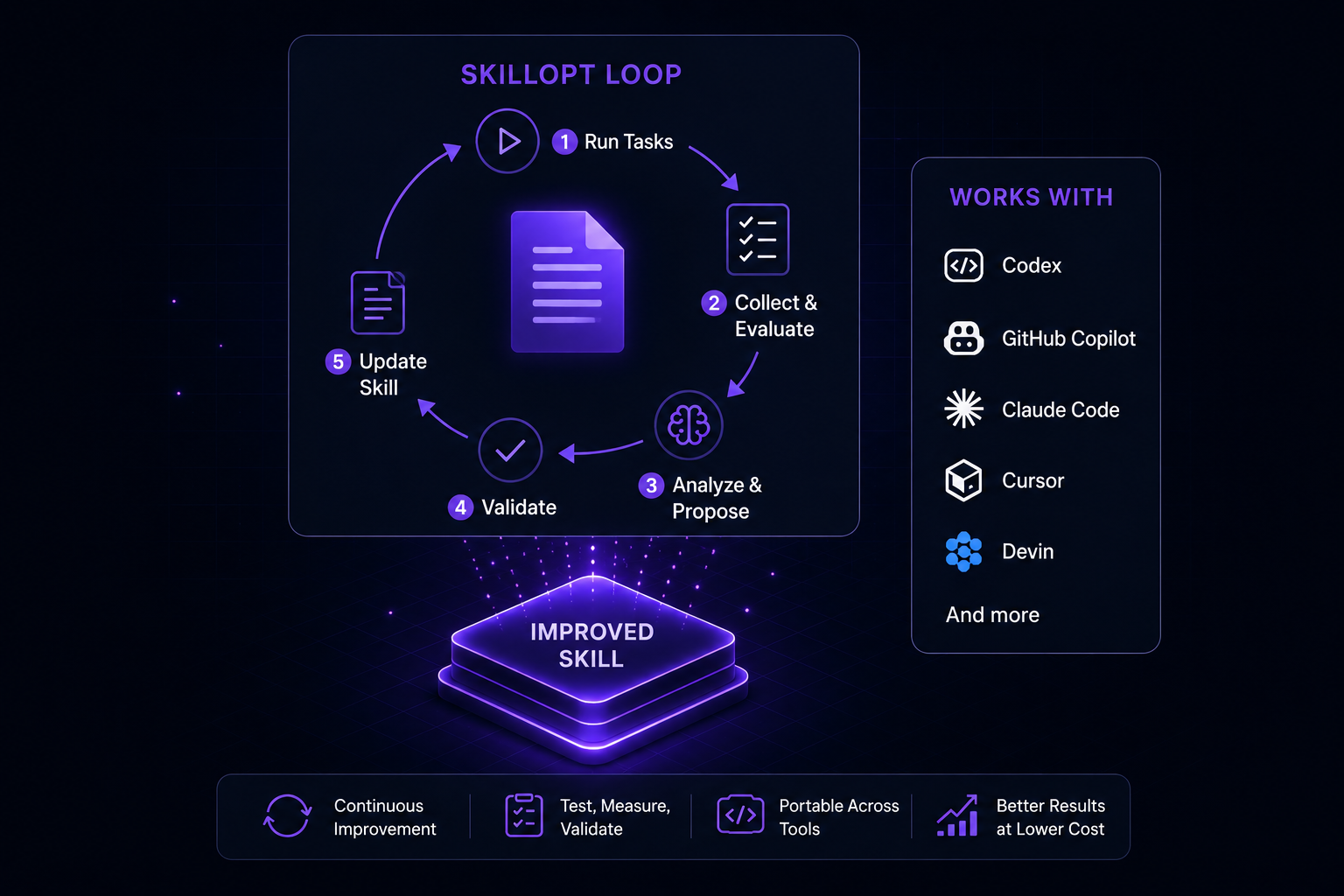
Microsoft’s SkillOpt shows how AI coding agents can improve through self-evolving skills without retraining the model or rebuilding the agent harness.

Ashton Kutcher is departing Sound Ventures, the firm he co-founded 11 years ago, to launch a new early-stage venture capital fund with former NFX partner Morgan Beller.

Anthropic has released Claude Sonnet 5 with a 1 million token context window while securing US Department of Commerce clearance to bring back its sidelined Fable 5 and Mythos 5 models.