Improving Your AI Coding Agent Without switching the Model or touching the harness
Microsoft’s SkillOpt shows how AI coding agents can improve through self-evolving skills without retraining the model or rebuilding the agent harness.

Coralogix raised $200 million in a Series F funding round on Wednesday, valuing the software-monitoring startup at $1.6 billion as it attempts to build an observability layer for autonomous AI agents.
The Boston-headquartered company, founded in Israel, secured the capital just 11 months after its Series E round. The rapid fundraising highlights accelerating investor interest in tools designed to track, troubleshoot, and manage increasingly autonomous AI systems in production environments.
The Series F round was led by Advent and the Canada Pension Plan Investment Board (CPPIB). Greenfield Partners and Brighton Park Capital also participated in the round, bringing Coralogix's total funding to $550 million.
A report on the funding notes that the $1.6 billion post-money valuation reflects a significant step up in investor appetite for AI infrastructure. The company plans to use the capital to expand its platform's capability to monitor autonomous systems.
Software companies are racing to deploy AI agents that can autonomously write code, investigate operational problems, and complete complex engineering tasks. Coralogix currently serves more than 5,000 customers globally, including IBM, Tradeweb, and JFrog.
As these agents operate with less human oversight, identifying why an agent failed or executed an incorrect action becomes a critical operational challenge. Traditional monitoring tools are often ill-equipped to parse the non-deterministic decision-making paths of large language models.
The broader observability market is experiencing rapid consolidation and shifting dynamics. Established giants like Datadog, New Relic, and Splunk are also updating their platforms to capture AI workloads.
Coralogix is betting that a dedicated focus on real-time data analysis and agent-specific telemetry will allow it to compete effectively against these legacy providers. By analyzing logs, metrics, and traces in real time, the company aims to provide developers with the exact execution path of an AI agent.
This data is essential for debugging agents that stall or produce malformed outputs during multi-step workflows. Without deep visibility into the intermediate steps of an agent's reasoning process, developers struggle to identify where a system went off course.
The massive influx of capital into AI agent infrastructure comes amid growing debate over the actual utility of these autonomous systems. While companies promise massive productivity gains, some critics argue that the current generation of AI assistants focuses on the wrong problems.
An analysis explores this tension, noting that while new agents like Google's Gemini-powered Spark can perform highly personalized tasks, they often fail to address systemic operational inefficiencies. This skepticism highlights the pressure on startups like Coralogix to prove that their monitoring tools can deliver tangible enterprise value.
As enterprises transition from experimental pilots to production deployments, the demand for rigorous operational data is expected to rise. Coralogix is positioning itself to be the primary telemetry provider for this transition, betting that the complexity of AI agents will make robust observability indispensable.
Subscribe wiring is coming soon. For now, follow the daily news feed or connect on LinkedIn for updates.
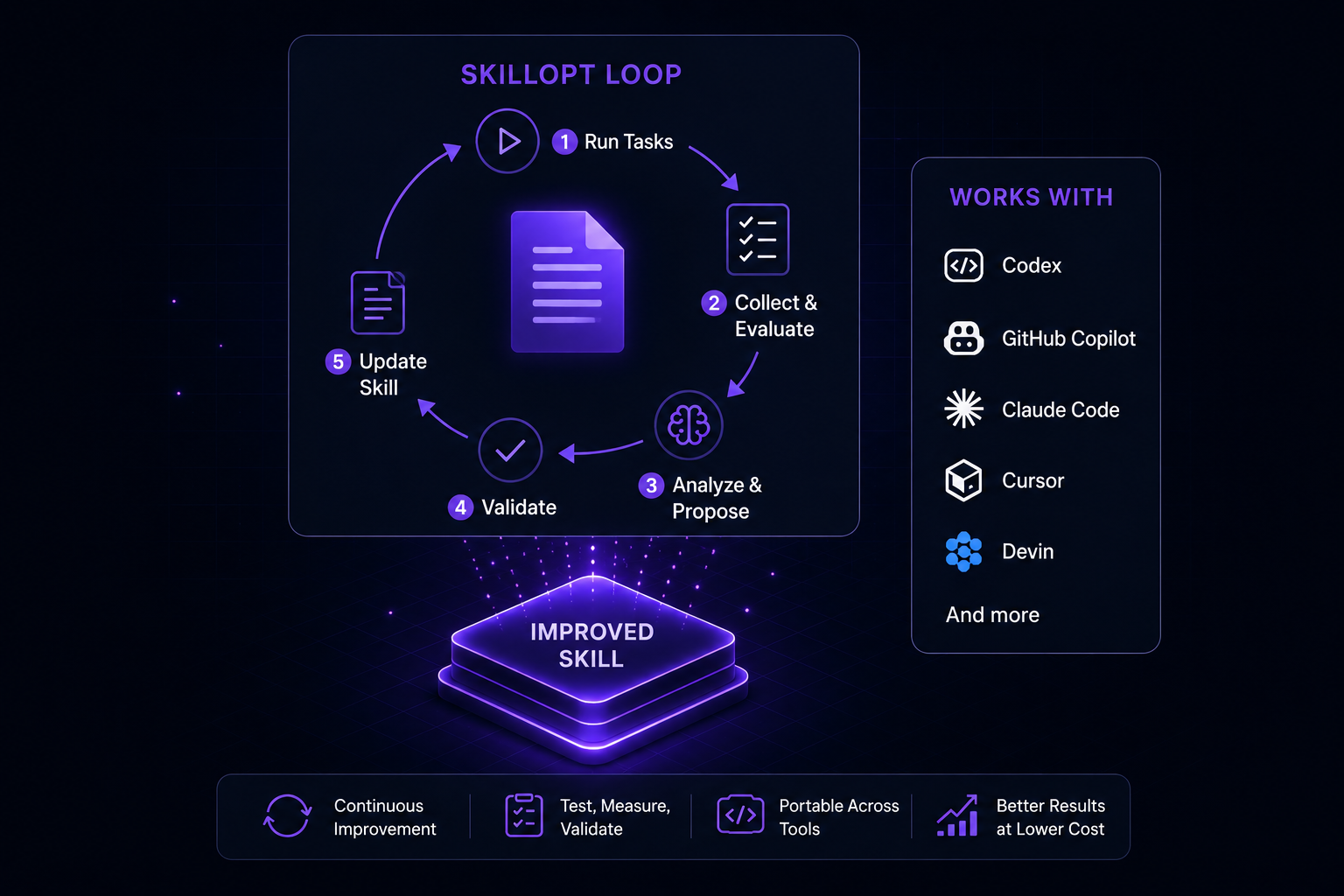
Microsoft’s SkillOpt shows how AI coding agents can improve through self-evolving skills without retraining the model or rebuilding the agent harness.

Ashton Kutcher is departing Sound Ventures, the firm he co-founded 11 years ago, to launch a new early-stage venture capital fund with former NFX partner Morgan Beller.

Anthropic has released Claude Sonnet 5 with a 1 million token context window while securing US Department of Commerce clearance to bring back its sidelined Fable 5 and Mythos 5 models.