Improving Your AI Coding Agent Without switching the Model or touching the harness
Microsoft’s SkillOpt shows how AI coding agents can improve through self-evolving skills without retraining the model or rebuilding the agent harness.

Coherent broke ground on an expanded semiconductor manufacturing facility in Sherman, Texas, on Wednesday, aiming to scale the production of indium phosphide wafers used in high-speed optical communications. The expansion of the site, which houses the world’s first six-inch indium phosphide fabrication plant, represents a major domestic manufacturing push to support the optical backbone of generative artificial intelligence clusters.
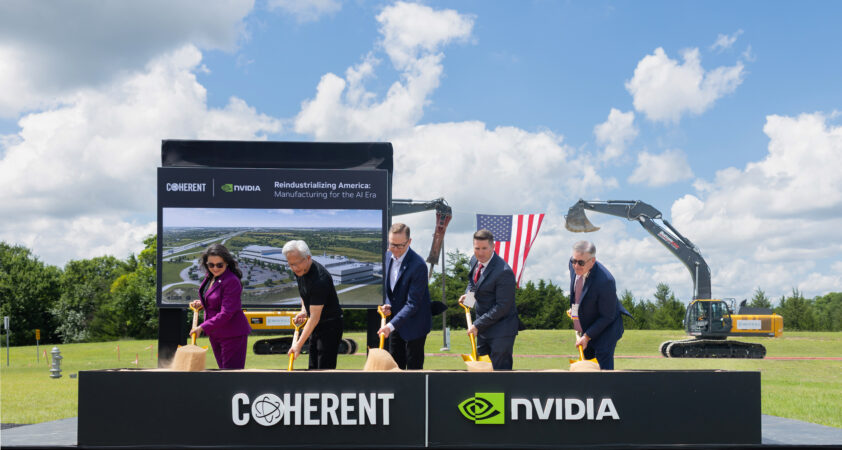
The facility manufactures the lasers, optoelectronic components, and compound semiconductors required to transmit data at the speed of light between AI chips, servers, and data centers. As AI workloads demand unprecedented bandwidth, the expansion aims to alleviate physical data transfer bottlenecks by scaling the production of indium phosphide (InP) wafers, which serve as the foundation for modern optical transceivers.
Indium phosphide has emerged as a critical material for high-bandwidth optical networking. Unlike traditional silicon, indium phosphide allows for the integration of lasers directly onto the chip, enabling faster data transmission with lower power consumption. Coherent's Sherman facility operates the industry's first six-inch indium phosphide wafer fabrication line, a significant upgrade from legacy three-inch and four-inch production lines.
The transition to six-inch wafers dramatically increases the yield per wafer, lowering the unit cost of optical components. These components are essential for manufacturing the optical transceivers that connect thousands of graphics processing units within modern AI supercomputers. According to NVIDIA's published report on the groundbreaking, the expanded facility will directly scale this wafer production capacity to meet surging global demand.
The groundbreaking ceremony featured appearances by high-profile technology executives, highlighting the strategic importance of optical hardware in the AI supply chain. NVIDIA founder and CEO Jensen Huang joined Coherent CEO Jim Anderson to mark the construction milestone. The executives discussed how physical infrastructure must evolve to keep pace with rapid software and architectural advancements.
During a fireside chat at the event, Huang emphasized that physical networking limits now dictate the practical scaling limits of large language models. The transfer of massive datasets across distributed nodes requires optical connections to prevent latency spikes. Coherent's manufacturing expansion details indicate that the new facility will help secure a stable domestic supply of these critical optoelectronic components.
"AI is the ultimate general-purpose technology," Huang said during the ceremony. "Because intelligence is fundamental—the ability to process information, to reason and solve problems—it affects every single industry."
The expansion represents a significant victory for the local economy in Sherman, Texas, which has steadily positioned itself as a hub for advanced semiconductor manufacturing. Sherman Mayor Shawn Temann and Adriana Cruz, the executive director of Texas Economic Development and Tourism, attended the ceremony to deliver remarks on the state's growing role in the technology supply chain.
Local officials noted that the expansion will create high-tech manufacturing jobs and attract specialized engineering talent to the region. The state of Texas has actively incentivized semiconductor companies to build and expand facilities locally, leveraging both state-level programs and federal funding opportunities designed to repatriate critical hardware manufacturing.
As AI models grow to trillions of parameters, the bottleneck in training performance has shifted from raw compute power to interconnect bandwidth. Traditional copper cabling is facing physical limitations in distance and speed, forcing data center operators to transition to optical interconnects even for short-range connections within the same rack.
By scaling the production of indium phosphide wafers, Coherent aims to accelerate the deployment of next-generation 800G and 1.6T optical transceivers. These devices convert electrical signals from GPUs into optical signals, allowing data to travel across the data center with minimal latency and degradation, securing the physical pipeline that keeps modern AI clusters operational.
Subscribe wiring is coming soon. For now, follow the daily news feed or connect on LinkedIn for updates.
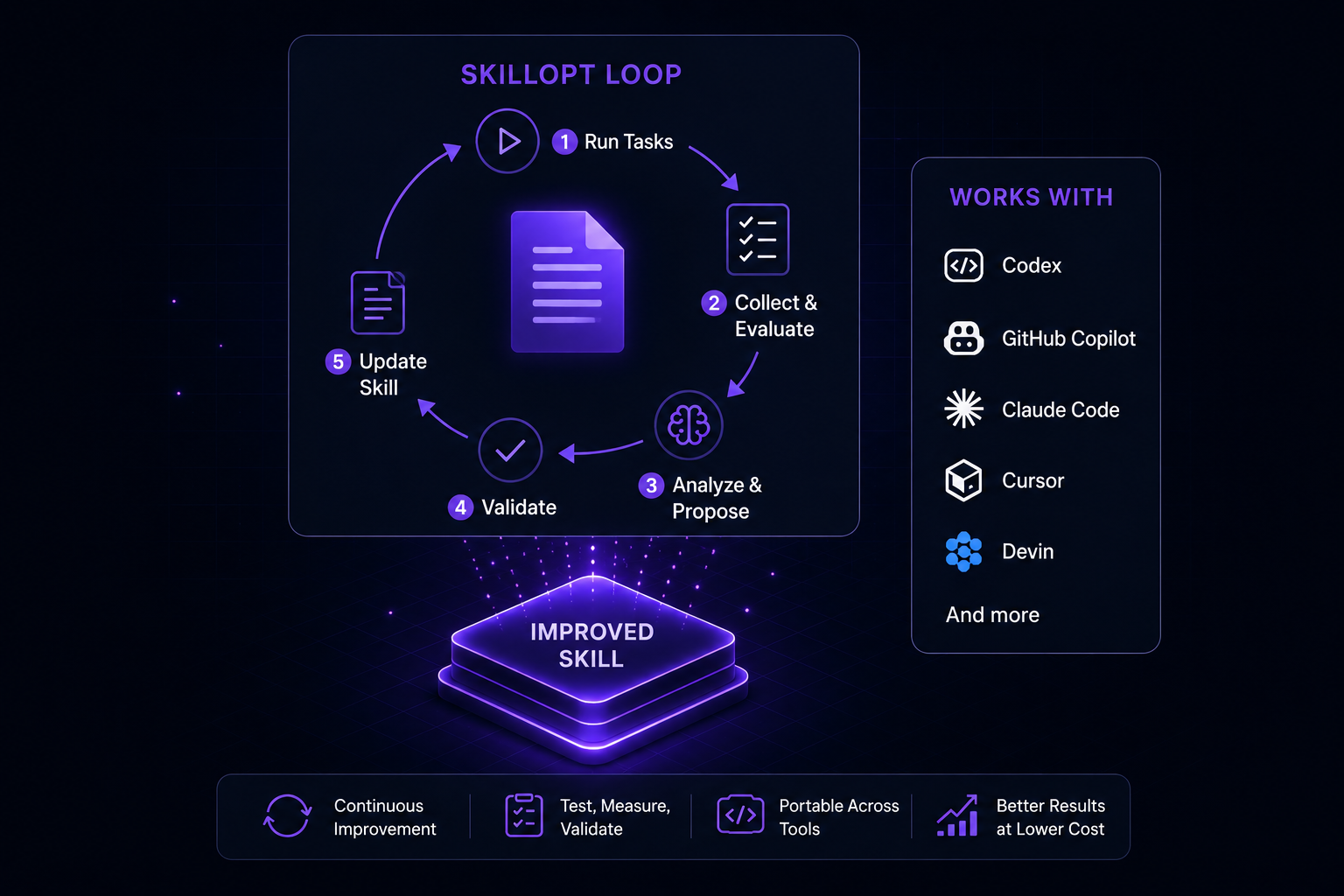
Microsoft’s SkillOpt shows how AI coding agents can improve through self-evolving skills without retraining the model or rebuilding the agent harness.

Ashton Kutcher is departing Sound Ventures, the firm he co-founded 11 years ago, to launch a new early-stage venture capital fund with former NFX partner Morgan Beller.

Anthropic has released Claude Sonnet 5 with a 1 million token context window while securing US Department of Commerce clearance to bring back its sidelined Fable 5 and Mythos 5 models.