Improving Your AI Coding Agent Without switching the Model or touching the harness
Microsoft’s SkillOpt shows how AI coding agents can improve through self-evolving skills without retraining the model or rebuilding the agent harness.
Amazon Web Services detailed a new implementation pattern on May 21, 2026, demonstrating how developers can build intelligent research assistants in 30 lines of code using Strands Agents and Amazon Bedrock. The technical guide aims to bypass the complex orchestration, conversation state management, and multi-step API coordination that typically bloat agentic AI projects into complex distributed systems.

The release addresses a growing friction point in enterprise software engineering, where developers struggle to move agentic workflows from prototype to production. By offloading state management to Strands and using Bedrock's foundation models, the architecture allows builders to deploy autonomous reasoning agents without writing custom orchestration layers or managing raw natural language processing pipelines.
The technical walkthrough published on the AWS Machine Learning Blog outlines a lightweight architecture that pairs Strands Agents with AWS managed services. Instead of manually chaining API calls, developers use Strands to orchestrate agent reasoning and maintain session memory.
The integration relies on three primary components to streamline the development process:
This push to simplify agent development arrives amid significant organizational hurdles for companies attempting to deploy autonomous systems. A report published by MIT Technology Review reveals a sharp disconnect between corporate ambition and technical readiness.
According to the report, which was produced in partnership with Ema, 85 percent of surveyed organizations plan to adopt agentic AI within the next three years. However, 76 percent of those same organizations acknowledge that their current operations, workflows, and technical infrastructure are unprepared to support the shift.
The report highlights that many enterprises attempt to layer AI agents directly onto existing human-centric operating models. Prasun Shah, global CTO for workforce consulting at PwC UK Consulting, described this approach in the report as a temporary fix that fails to address systemic limitations.
"They’re embedding AI employees into what is a human operating model, layering on AI agents to existing workplace structures when this is like adding sticky tapes to parts of an operating model that is breaking."
To bridge this readiness gap, cloud providers are focusing on developer-centric tooling that abstracts infrastructure complexity. The Strands implementation relies on Kiro to generate the underlying application code, allowing engineers to build functional research assistants without specialized machine learning backgrounds.
By standardizing how agents interact with external APIs and databases, the framework reduces the custom code required to handle edge cases in multi-step reasoning. This standardized approach directly targets the workflow and process readiness issues cited by the majority of enterprise IT leaders in recent industry surveys.
Subscribe wiring is coming soon. For now, follow the daily news feed or connect on LinkedIn for updates.
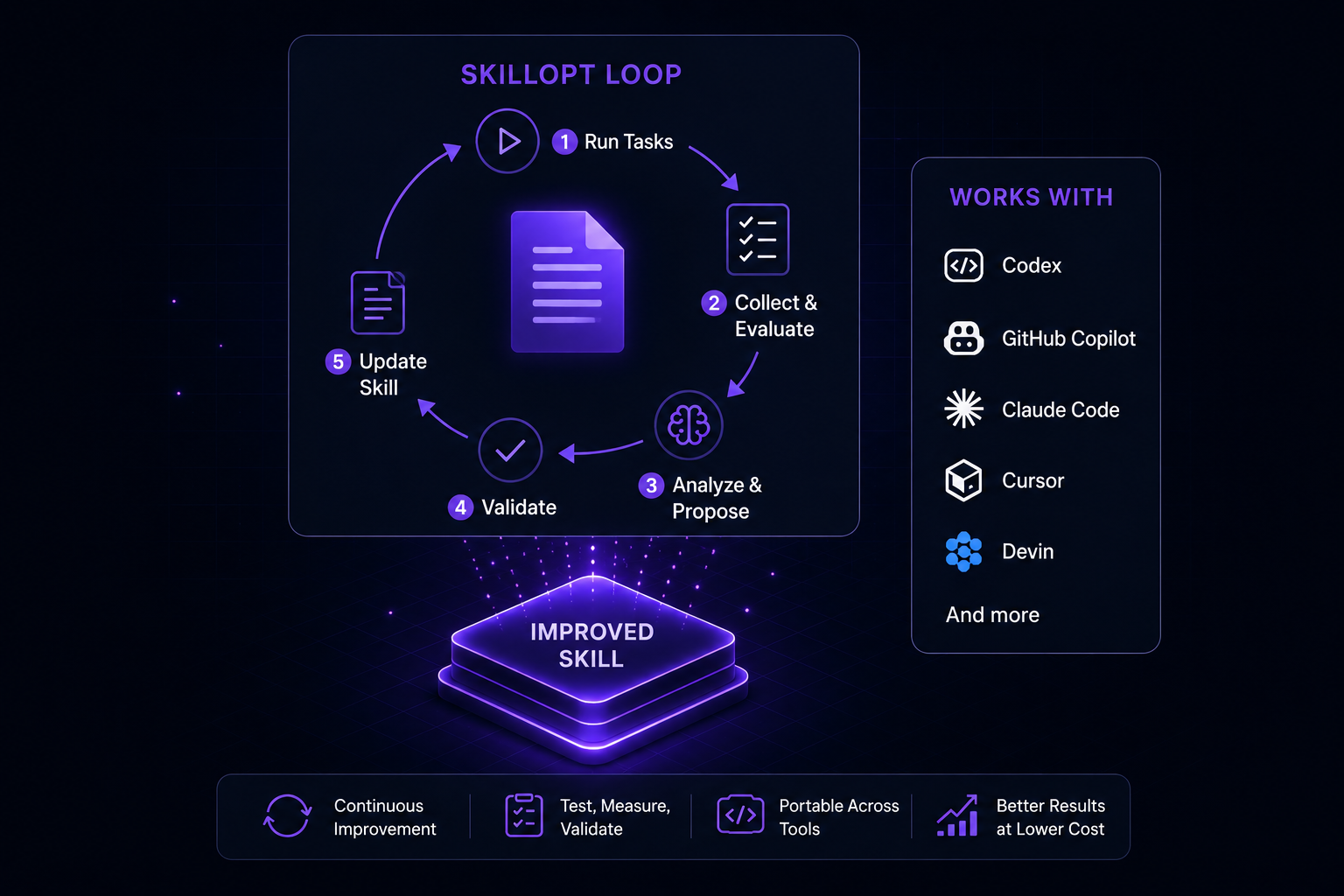
Microsoft’s SkillOpt shows how AI coding agents can improve through self-evolving skills without retraining the model or rebuilding the agent harness.

Ashton Kutcher is departing Sound Ventures, the firm he co-founded 11 years ago, to launch a new early-stage venture capital fund with former NFX partner Morgan Beller.

Anthropic has released Claude Sonnet 5 with a 1 million token context window while securing US Department of Commerce clearance to bring back its sidelined Fable 5 and Mythos 5 models.